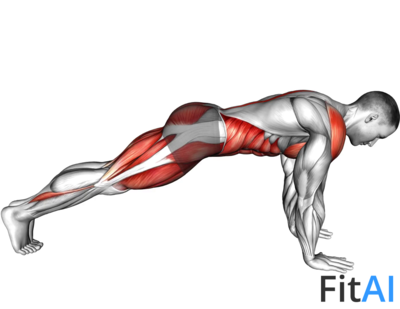
Hyperextension
Expert Advice
Avoid hyperextending your back at the top of the movement. Rise to a point where your body is in a straight line from head to feet.
How-to-do Steps
- Position yourself face down on a hyperextension bench, with your ankles secured under the footpads.
- Cross your arms over your chest or place your hands behind your head.
- Bend at the waist to lower your upper body towards the floor, keeping your back straight.
- Raise your torso until your body forms a straight line, then slowly lower back to the starting position.
Track Hyperextension in FitAI
Log your sets, reps, and weights automatically. Get AI-powered progressive overload recommendations and form feedback — personalized to your training history.
Muscles Worked
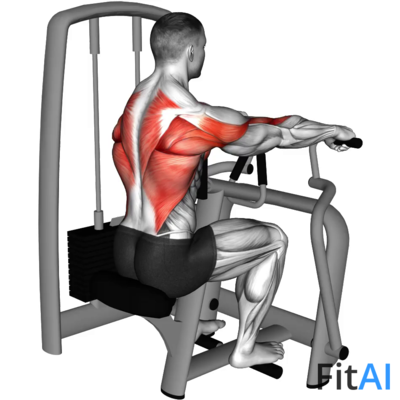
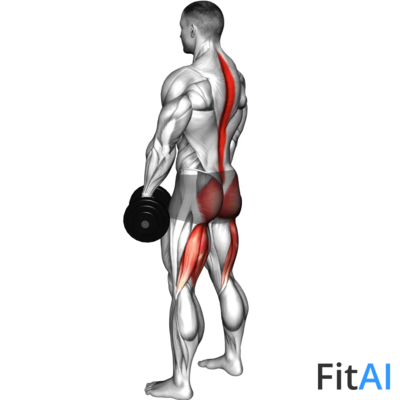
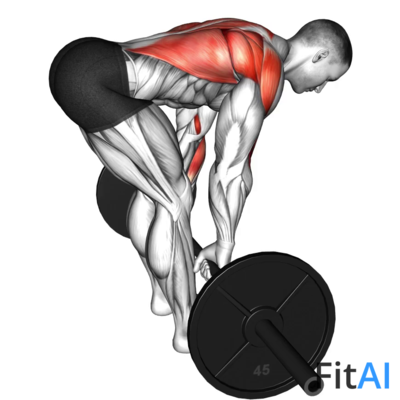
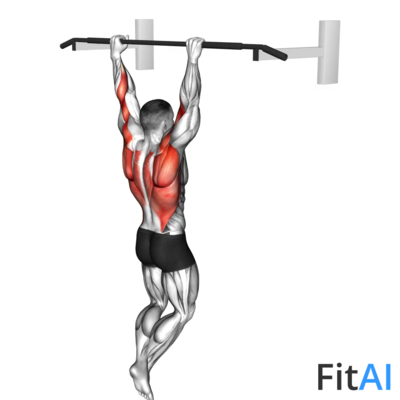
Hyperextension primarily targets the Lats, with Strength mechanics using Special Bench. Understanding muscle activation patterns helps you focus on proper engagement and maximize training effectiveness.
Primary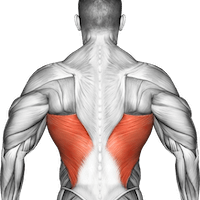
Lats50%
Secondary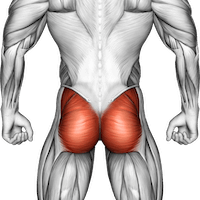
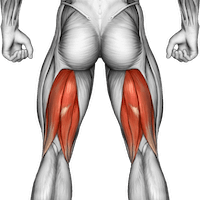
Glutes25%
Hamstrings25%
Equipment Special Bench
Exercise Type
Strength
Sets & Reps Guidance
Beginner3 x 10-12
Intermediate4 x 8-10
Advanced4 x 6-8
Frequently Asked Questions
What muscles does Hyperextension work?
Hyperextension primarily targets the Lats. Secondary muscles involved include Glutes, Hamstrings. It is classified as a Strength exercise performed with Special Bench.
How many sets and reps should I do for Hyperextension?
For beginners, start with 3 sets of 10-12. Intermediate lifters can do 4 sets of 8-10. Advanced athletes can push to 4 sets of 6-8. Adjust based on your goals and recovery capacity.
Is Hyperextension suitable for beginners?
Hyperextension is rated as intermediate difficulty. Beginners may want to start with lighter loads or simpler variations and progress to this exercise as their strength and coordination improve.