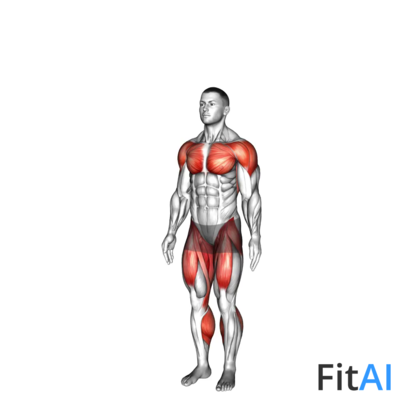
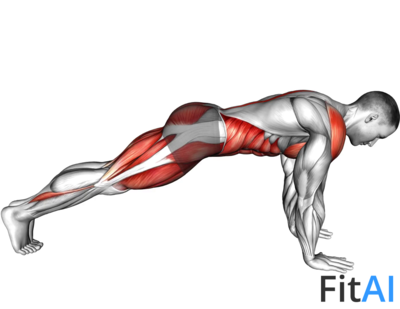
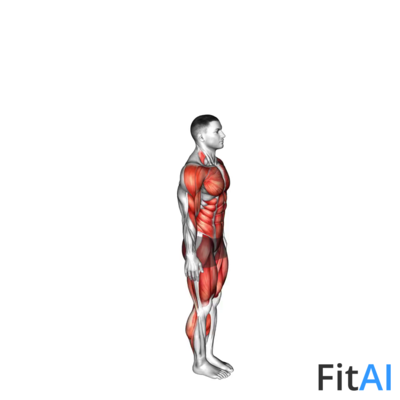
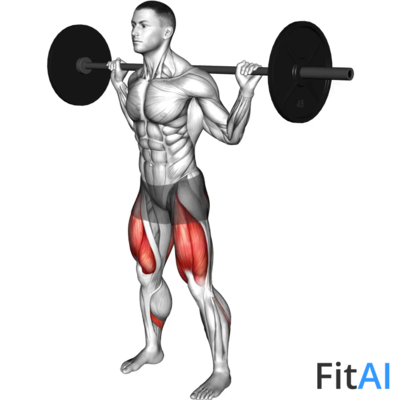
Lotus Pose Breathing
Expert Advice
Maintain a tall, straight spine and focus on deep, rhythmic breathing to enhance relaxation and increase the stretch.
How-to-do Steps
- Sit on the floor with your legs extended in front of you.
- Bend your right knee and place your right foot on your left thigh.
- Bend your left knee and place your left foot on your right thigh.
- Place your hands on your knees with palms facing up.
- Sit up straight, elongate your spine, and relax your shoulders.
- Close your eyes and take deep, slow breaths, inhaling and exhaling through your nose.
- Continue this breathing pattern for several minutes, focusing on the sensation of breath moving in and out of your body.
Track Lotus Pose Breathing in FitAI
Log your sets, reps, and weights automatically. Get AI-powered progressive overload recommendations and form feedback — personalized to your training history.
Muscles Worked
Lotus Pose Breathing primarily targets the Glutes, with Stretching mechanics using Body Weight. Understanding muscle activation patterns helps you focus on proper engagement and maximize training effectiveness.
Primary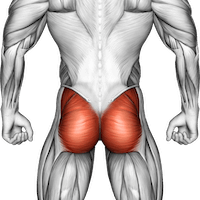
Glutes100%
Equipment Body Weight
Exercise Type
Stretching
Sets & Reps Guidance
Beginner3 x 20s
Intermediate3 x 30s
Advanced4 x 45s
Frequently Asked Questions
What muscles does Lotus Pose Breathing work?
Lotus Pose Breathing primarily targets the Glutes. It is classified as a Stretching exercise performed with Body Weight.
How many sets and reps should I do for Lotus Pose Breathing?
For beginners, start with 3 sets of 20s. Intermediate lifters can do 3 sets of 30s. Advanced athletes can push to 4 sets of 45s. Adjust based on your goals and recovery capacity.
Is Lotus Pose Breathing suitable for beginners?
Yes, Lotus Pose Breathing is rated as a beginner-friendly exercise, making it an excellent starting point. Focus on mastering proper form before increasing intensity or load.